How Do You Respond to Stress? Discover Why It Matters So Much

keithivey • May 26, 2022

How you deal with stress matters. Unless you were born with a special gift for managing stress intelligently and effectively, this is one of the skills worth your time to develop. Your response to stress can predict the level of success you enjoy in your life. How you deal with stress also affects your health.


One thing is for sure, if you avoid all stressful situations, your life will be stagnant. Growth requires dealing with stress.
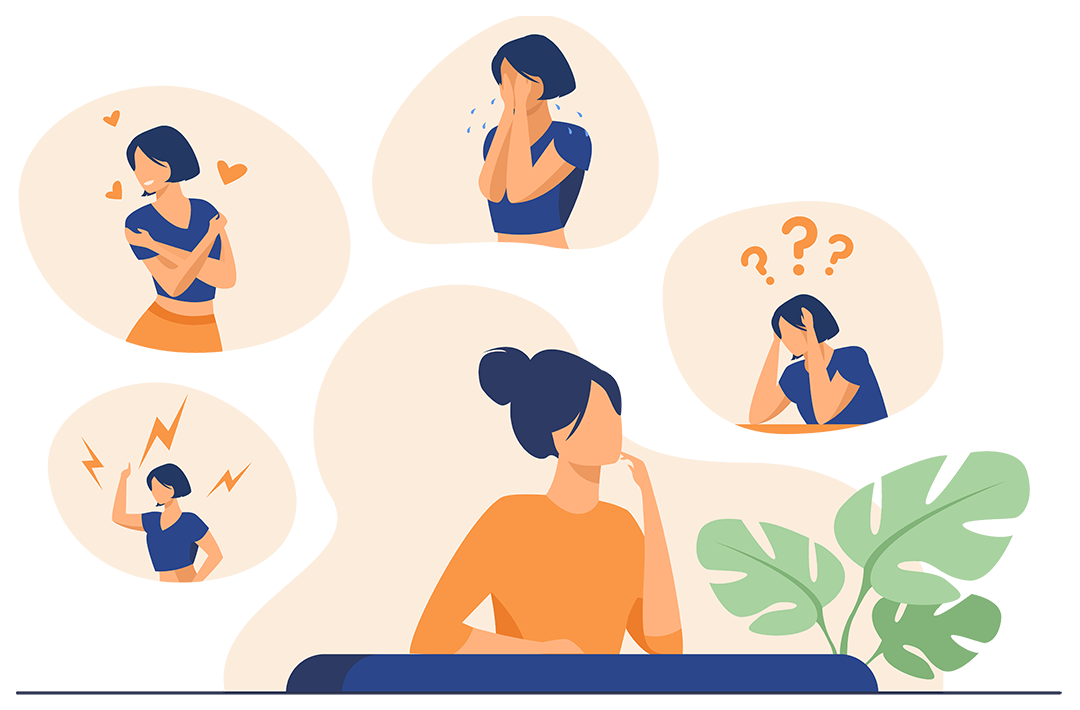
A woman is sitting at a table with many different thoughts coming out of her head

See how your ability to deal with stress matters more than you think:

Are you an escape artist, distractor, or a solver? Most people respond to stress in one of three ways.

  • The escape artist does anything he can to remove himself from the situation. Any solution that removes the stress in the short-term is a good option in his mind. The long-term consequences are of little concern. Hate your job? Quit, even if you don’t have another. Relationship stress? Leave them. You get the picture.
  • The distractor attempts to distract himself from the issue that’s causing the stress. This distraction often takes the form of watching TV, shopping, doing chores, surfing the internet, or eating unhealthy foods.
  • The solver focuses on finding solutions to the cause of the stress. If there isn’t a solution to the stress, the solver does his best to relax and avoid worrying about anything beyond his control.

Negative effects of poor responses. Poor responses to stress can negatively impact your physical and emotional health, as they tend to internalize the stress or cause worse results than the original issue.

  • Learning to respond to stress effectively is good for you in many ways!

A huge part of being successful depends on how you handle stress. Most successful people learn positive ways to manage their stress.


It’s clear that stress is a part of life that must be managed effectively to maximize success, health, and happiness.

Use these tips to deal with stress intelligently and get the most out of your life:

Focus on finding a solution.

There really isn't any other option that makes sense. If you're going to expend time and energy, expend them wisely. Rather than worrying, focus on finding a way out of the situation causing your stress. If there's nothing you can do, do your best to avoid worrying about it.

Keep your head down and implement your solution. Once you've found a solution, put your effort into implementing it. This is the best use of your time at this point. 

  • Consider how different your life would be if you committed all of the energy you spent worrying and put it toward finding solutions and putting them into action.

Avoid jumping at options that simply relieve your pain in the short-term. A natural tendency when faced with stress is to focus on a short-term solution. While this may relieve you of your stress in the near future, it will also likely cause you even greater pain down the road.

  • Avoid using stress relief as a primary objective in your decision-making process. Maintain a long-term focus.

A cartoon of a man with a light bulb on his head

Everyone deals with stress in their own unique way. We might mimic our parents or still be using habits we developed in childhood. Most of us wish we were better at managing stress. Make time for examining this important part of your life. How you respond to stress matters.

DOWNLOAD NOW!

Self-Hypnosis Guide for Beginners

ENHANCE YOUR LIFE FROM THE COMFORT OF YOUR COUCH

Self-Hypnosis Guide for Beginners Form - Blog Page

Journey Inward Journey Outward Hypnosis Card
Man at desk overwhelmed, holding head; hands hold tablet, charts, phone, and clock.
By Admin February 6, 2026
Sales professionals are trained to think clearly. So, when something feels off, the natural response is to analyze it: What am I doing wrong? What should I change? What’s the right mindset? But emotional blocks don’t respond to insight. You can understand why something is happening and still feel stuck. That’s because emotional responses are not logical problems—they’re protective patterns. They exist to keep you safe, not to make sense. This is why: Confidence doesn’t return just because you understand the issue Affirmations don’t stick Mindset shifts fade under pressure Lasting change happens when the underlying emotional response resolves - not when it’s managed. When that happens, clarity returns naturally. Performance improves without force. If you’ve tried to think your way out of something that feels stubbornly emotional, there’s nothing wrong with you. You may simply be working at the wrong level.
Woman with curly hair, stressed at a laptop in an office, hands on head.
By Admin February 1, 2026
Few thoughts drain performance faster than this one: “I should be further along by now.” It sounds reasonable. Motivating, even. But internally, it creates pressure without direction - and pressure erodes trust. This belief quietly reframes every outcome: Wins don’t feel satisfying Losses feel personal Progress feels insufficient Over time, this internal narrative becomes exhausting. The nervous system doesn’t interpret “should” as encouragement- it hears it as threat. As judgment. As risk of failure. And when judgment enters the system, creativity and confidence exit. Many high-performing sales professionals carry this pressure silently. From the outside, they look capable. Inside, they feel behind. Releasing this emotional weight isn’t about lowering standards. It’s about restoring internal safety so progress can resume naturally. If this sentence lives quietly in your head, it may be costing you more than you realize.
Man with headset gestures while looking at computer in office setting.
By Admin January 25, 2026
Most sales calls don’t fall apart because of what’s said. They fall apart because of what’s felt - often just seconds before the conversation begins. A subtle tightening in the chest. A flicker of doubt. A sudden urge to “get through it.” That moment matters more than the script. Internally, the nervous system is scanning for threat: Will I be judged? Will I fail again? Will this confirm something I fear about myself? When the system senses risk, it shifts into protection mode. Presence drops. Authenticity fades. The conversation loses its natural rhythm. The result? You talk more than you listen You rush instead of connect You push instead of invite None of this is conscious. And none of it responds to logic. That’s why “knowing better” doesn’t fix it. Sales conversations work best when the person having them feels internally safe. When that safety is restored, confidence returns without effort. If you’ve ever wondered why some calls just flow and others don’t - this is usually why.
Two women collaborate at a desk, looking at a computer screen in an office.
By Admin January 13, 2026
When performance dips, the instinct is almost universal: Push harder. Make more calls. Refine the pitch. Add pressure. But for many sales professionals, trying harder doesn’t produce better results - it produces tension. And tension is expensive. Internally, effort without resolution signals danger to the nervous system. The body tightens. Focus narrows. Confidence erodes. Conversations feel forced instead of fluid. What looks like “lack of discipline” from the outside is often self-protection on the inside. The mind is trying to keep you safe from disappointment, embarrassment, or perceived failure - even if that protection now works against your goals. This is why pushing through doesn’t restore confidence. It often deepens the block. Performance improves when internal resistance dissolves—not when it’s overpowered. Real change begins when effort is replaced with alignment. If you’ve noticed that pushing harder only makes things heavier, that’s not weakness. It’s information.
Man in suit, head in hands at desk, stressed by paperwork, next to a laptop and plant.
By Admin January 12, 2026
On the surface, it looks like a sales issue. Missed targets. Inconsistent performance. A sudden drop in confidence you can’t quite explain. So you do what professionals do: you analyze, adjust strategy, refine your pitch, and try harder. And yet - nothing really changes. Here’s a possibility most sales professionals never consider: What if the problem isn’t sales at all? What if what’s getting in the way is happening inside you, not in your process? Sales performance is deeply personal. It’s not just about numbers. It’s about exposure, judgment, pressure, rejection, and identity. Over time, the nervous system learns patterns. It remembers what hurt, what failed, and what felt unsafe. Those experiences don’t disappear just because you’ve gained more skill. They quietly shape how you show up. This is why intelligent, capable sales professionals sometimes stall without a clear reason. The issue isn’t motivation or discipline. It’s an internal protective response doing its job a little too well. Until that internal experience changes, external strategies can only take you so far. If this resonates, you may not need better tactics—you may need an internal reset.
January 7, 2026
What Anxiety Is Really Trying to Do for You (And Why Fighting It Makes Performance Worse)
Woman with red hair writing in a notebook on a sofa, covered by a red blanket.
By Admin November 20, 2025
You wake up already tired. The day hasn’t started, but your body feels like it’s dragging sandbags through wet cement. You’ve eaten well. You slept enough. You’re not sick. But something’s off—and it’s not just physical.
By Admin June 20, 2025
By Patricia Sarmiento, Guest Blogger – Public Health Corp
A young woman is sitting on a couch reading a book.
By Patricia Sarmiento, Public Health Corporation April 15, 2025
ADHD isn’t some flaw that needs fixing—it’s a different wiring of the brain. And like any other wiring, it can power a lamp or light up an entire city, depending on how you use it.
By Keith Ivey March 28, 2025
Adolescents with ADHD: How to Get Ahead of the Game!